
Why Choose Quality Pergolas for Your Outdoor Projects?
If you’re looking to transform your backyard into a natural sanctuary, integrating pergolas with vertical gardens and thoughtful landscaping is the perfect solution. This article will guide you through ideas and tips on how to combine these elements to create a functional and visually stunning outdoor space
The Magic of Pergolas in Landscaping
Pergolas are more than just shade structures; they have become a key element in modern landscaping design. When planned well, they can serve as the centerpiece of your garden, creating a focal point that invites relaxation and contemplation.
A pergola provides a defined space where you can incorporate various landscaping elements, from climbing plants that adorn its columns to vertical gardens that add texture and color. This combination creates a seamless transition between different areas of your yard, connecting your home’s design to the outdoors in a harmonious way.
Vertical Gardens: Maximizing Space Creatively
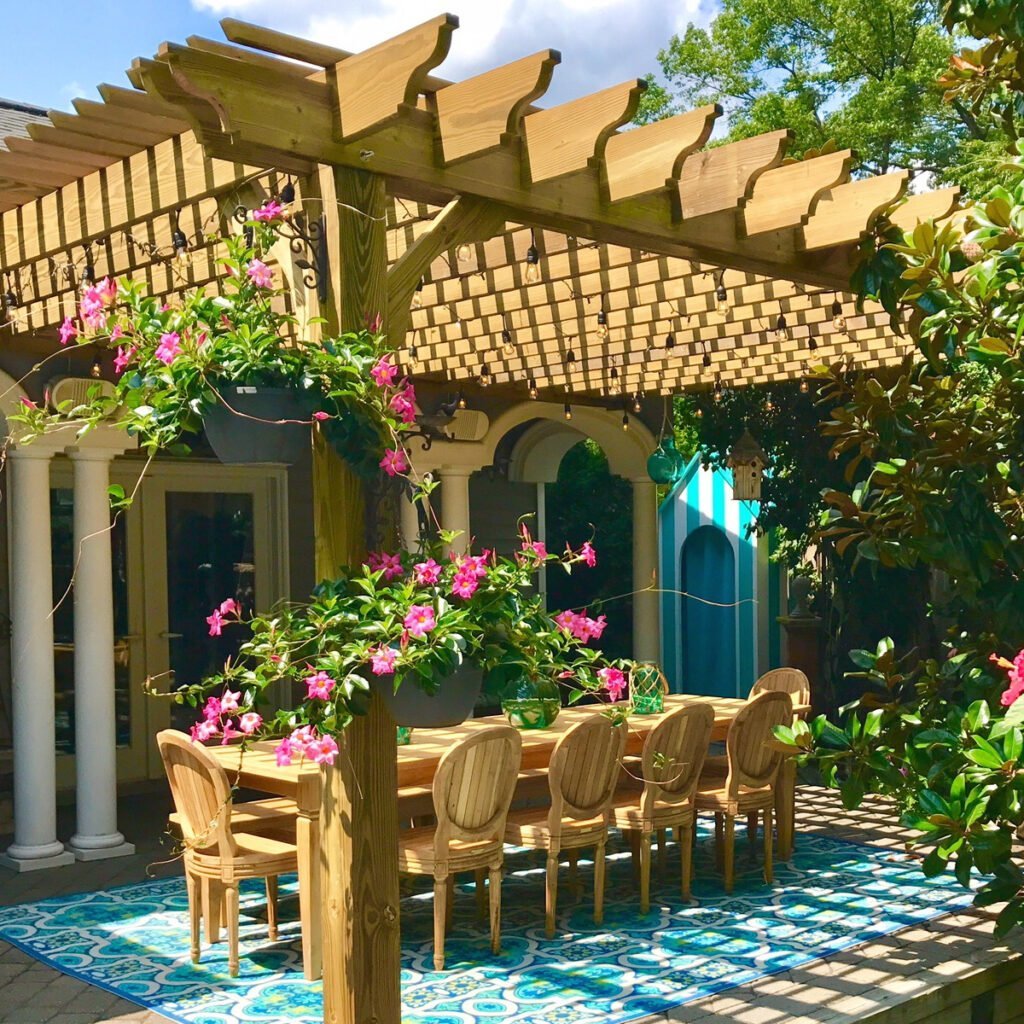
A vertical garden is an excellent way to maximize the use of space, especially if you have a smaller backyard. Integrating vertical gardens into a pergola allows you to add an extra layer of greenery, utilizing walls or even the pergola structure itself to support plants.
When choosing plants for a vertical garden, opt for those that thrive in your environment. Ferns, ivies, and succulents are great choices as they offer a variety of textures and colors while being relatively easy to maintain. When paired with a pergola, these plants create a sense of continuity from the ground up, visually expanding the space.
Tip: Consider installing an automated irrigation system to ensure your vertical garden receives the right amount of water, especially during hotter months.
Creating Functional and Aesthetic Spaces
Combining pergolas and vertical gardens offers an excellent opportunity to create functional spaces that are also visually appealing. For instance, you can use a pergola to cover an outdoor dining area while a nearby vertical garden provides privacy and a sense of seclusion.
Another idea is to use the pergola as a support structure for climbing plants like wisteria or jasmine, which not only add beauty and fragrance but also help to create natural shade and cool the space. For a more modern approach, consider incorporating contemporary design elements, such as built-in LED lights in both the pergola and the vertical garden, to create a magical atmosphere in the evening.
Seamlessly Integrating with Landscaping
To ensure the integration between the pergola, vertical garden, and the rest of your landscaping is seamless, it’s essential to think of the design as a whole. This means choosing plants that complement each other and harmonize with other landscaping elements like stone pathways, water features, and outdoor furniture.
Use different levels and layers to add depth to the space. Taller plants and shrubs can be positioned at the back, with smaller plants and flowers in front. This approach creates a “cascading garden” effect where each element stands out while contributing to the overall design.
Tip: Incorporating natural materials like stone and wood into the design of the pergola and vertical gardens can reinforce the connection to nature, making the space even more inviting.
Conclusion
Integrating pergolas with vertical gardens and landscaping is a powerful way to transform your backyard into a space that is both functional and aesthetically pleasing. With careful planning and attention to detail, you can create a green oasis that invites relaxation and contemplation while adding value and beauty to your home.
Ready to start? Contact us at Quality Decking of Utah to transform your backyard with the perfect combination of pergolas and landscaping!
Call to Action: Want to learn more about creating and maintaining a vertical garden? Check out our next article: Essential Tips for Perfect Vertical Gardens.